
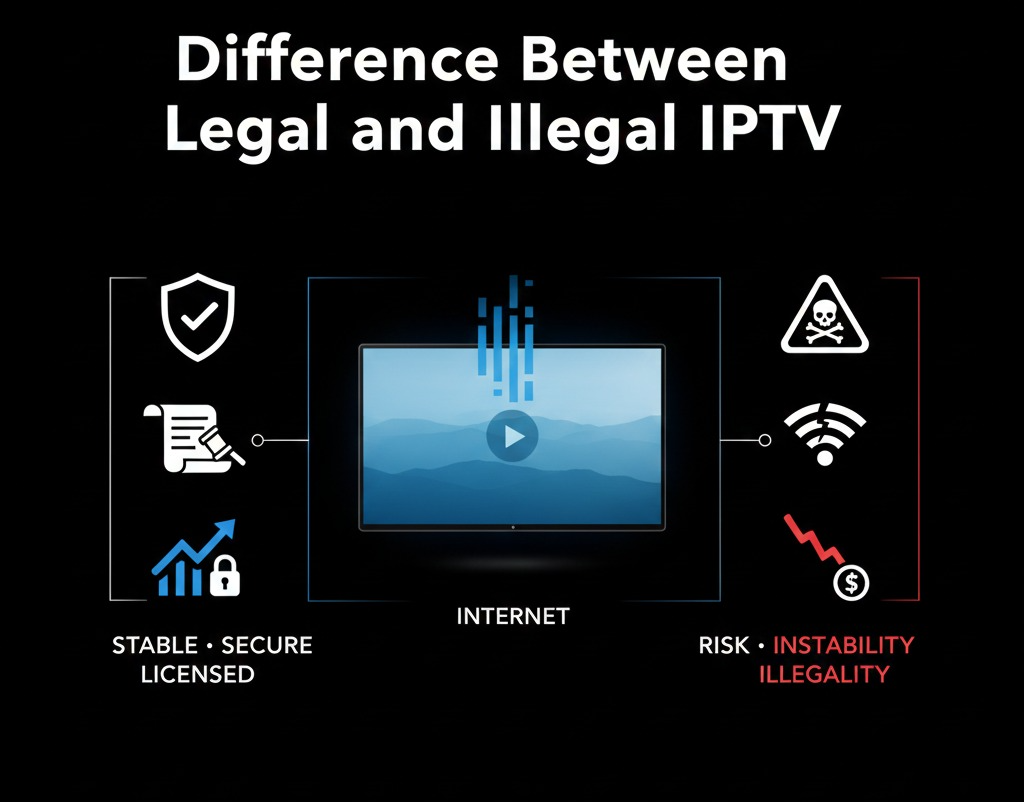
Learn the difference between legal and illegal IPTV, including risks, benefits, legality, pricing, quality, and how to choose a safe IPTV service.
Introduction
Internet Protocol Television (IPTV) has completely changed the way people consume television content. Instead of relying on traditional cable or satellite services, IPTV allows users to stream TV channels, movies, and series directly over the internet. With the growing popularity of smart TVs, Android boxes, Firesticks, and mobile devices, IPTV has become more accessible than ever.
However, not all IPTV services are created equal. One of the biggest sources of confusion for users is the difference between legal IPTV and illegal IPTV. Many people unknowingly subscribe to illegal IPTV services because they are cheap and offer thousands of channels, but they are unaware of the serious risks involved.
This article provides a complete, professional, and in-depth explanation of the difference between legal and illegal IPTV. By the end of this guide, you will clearly understand how IPTV works, how to identify legal and illegal services, the risks involved, and how to choose a safe and legal IPTV provider.
What Is IPTV?
IPTV stands for Internet Protocol Television. It is a system where television services are delivered using the internet rather than traditional broadcast methods such as cable, satellite, or terrestrial signals.
How IPTV Works
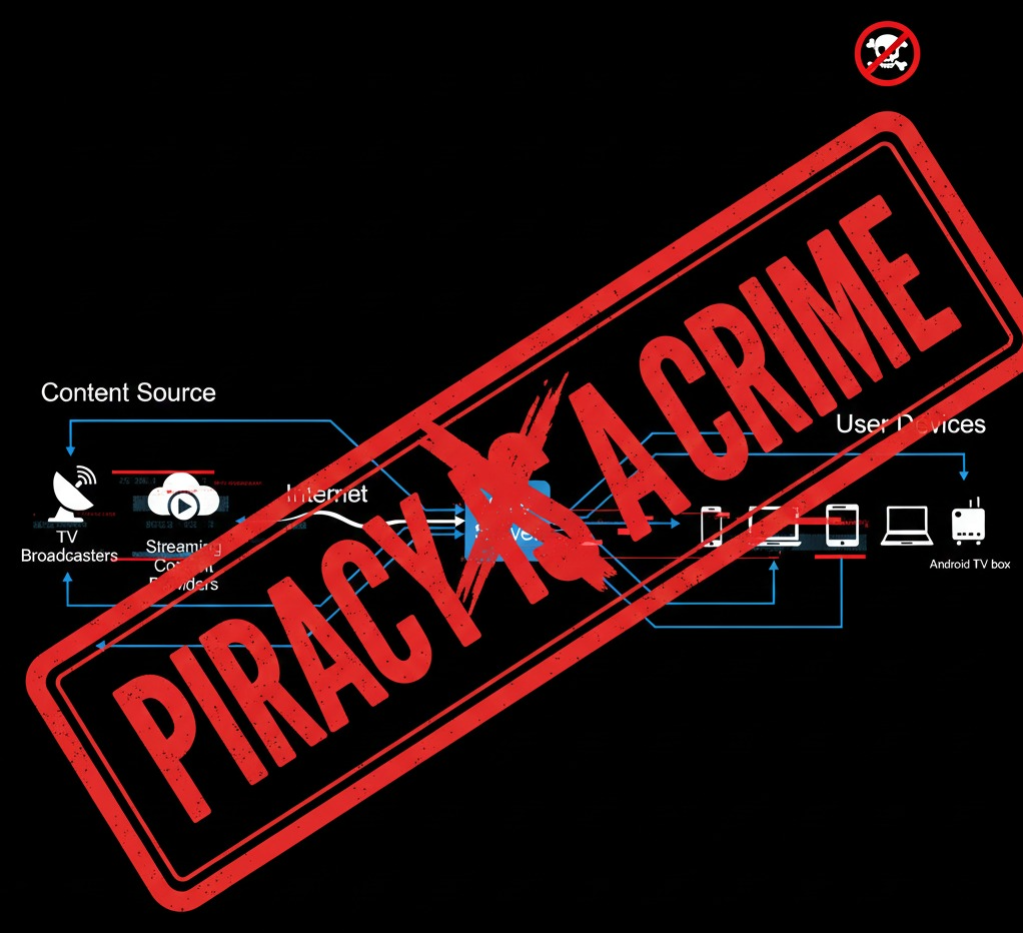
IPTV works by transmitting video and audio data in small packets over an internet connection. These packets are then reassembled and displayed on your device in real time.
Common IPTV formats include:
- Live TV streaming
- Video on Demand (VOD)
- Time-shifted media (catch-up TV)

Types of IPTV Services
There are three main types of IPTV services:
1. Live IPTV
This allows users to watch live television channels such as news, sports, and entertainment in real time.
2. Video on Demand (VOD)
VOD services allow users to watch movies and TV shows whenever they want, similar to Netflix or Amazon Prime.
3. Catch-Up TV
Catch-up TV allows users to watch programs that were previously broadcast, usually within the last 7 to 30 days.
What Is Legal IPTV?
Legal IPTV refers to IPTV services that have proper licensing agreements with content creators, broadcasters, and copyright holders. These services pay for the rights to distribute the content they offer.
Key Characteristics of Legal IPTV
- Licensed content distribution
- Transparent business operations
- Official apps on app stores
- Clear pricing and terms of service
- Customer support and legal company registration
Examples of Legal IPTV Services
- Netflix
- Amazon Prime Video
- Hulu
- Disney+
- YouTube TV
- Sling TV
- IPTV services offered by internet service providers
What Is Illegal IPTV?
Illegal IPTV services distribute copyrighted content without permission from the rights holders. These services often offer thousands of live channels, premium sports, and movies at extremely low prices.
Key Characteristics of Illegal IPTV
- No broadcasting licenses
- Extremely low subscription prices
- Thousands of channels from multiple countries
- No official company information
- Payments through crypto or unofficial methods
Legal IPTV vs Illegal IPTV: Key Differences
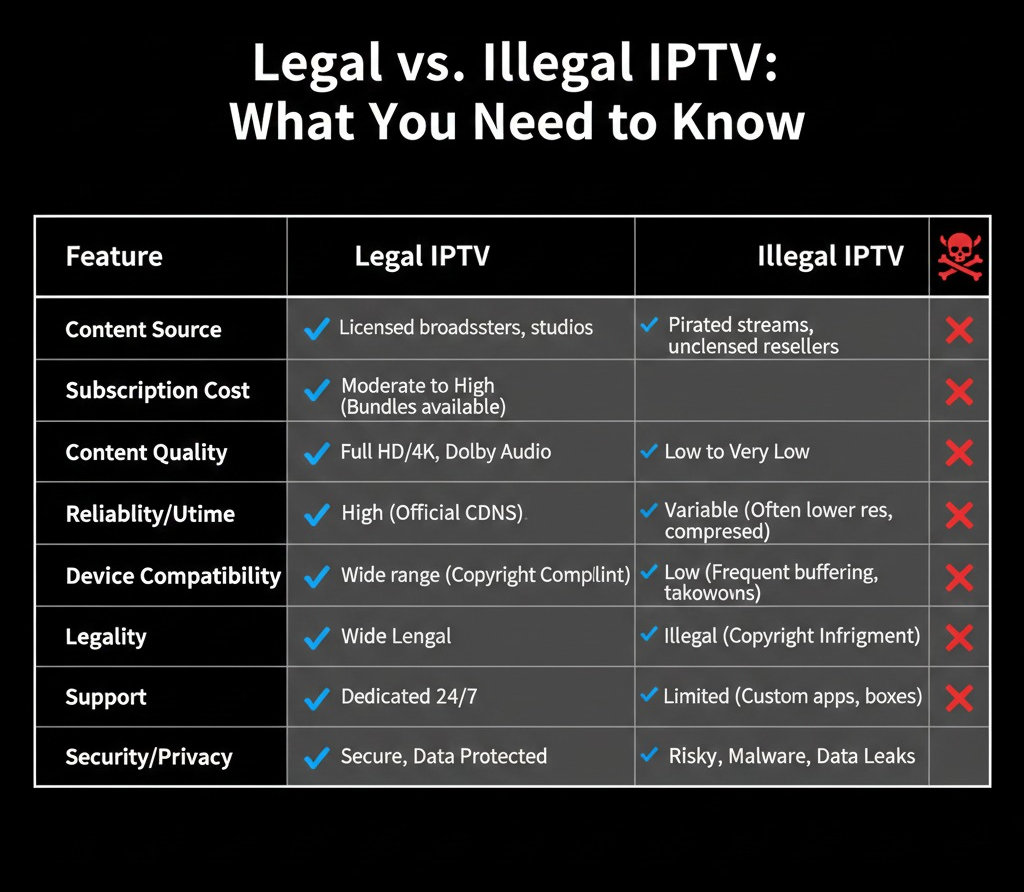
1. Legality
Legal IPTV services operate within copyright laws and broadcasting regulations. Illegal IPTV services violate copyright laws by redistributing content without authorization.
2. Price
Legal IPTV services usually cost more because they pay licensing fees. Illegal IPTV services are much cheaper because they avoid these costs.
3. Content Quality
Legal IPTV offers stable, high-quality streams. Illegal IPTV often suffers from buffering, low resolution, and frequent downtime.
4. Reliability
Legal services provide consistent uptime and customer support. Illegal services may disappear overnight.
5. Security
Legal IPTV apps are safe and secure. Illegal IPTV apps may contain malware or spyware.
Is Using Illegal IPTV Illegal for Users?
In many countries, using illegal IPTV is considered a violation of copyright law. While enforcement varies, users can face fines, warnings, or legal action.
Some countries target:
- IPTV providers
- IPTV resellers
- End users
Risks of Using Illegal IPTV
1. Legal Consequences
Users may receive fines or legal notices from authorities or internet service providers.
2. Malware and Viruses
Illegal IPTV apps are often modified and may contain malicious software.
3. Data Theft
Personal data, passwords, and payment information can be stolen.
4. Poor Service Quality
Streams may freeze, channels may disappear, and servers may shut down.
Benefits of Using Legal IPTV
1. Peace of Mind
You don’t have to worry about breaking the law.
2. High-Quality Streaming
Legal services offer HD and 4K streaming with minimal buffering.
3. Customer Support
Reliable support is available if something goes wrong.
4. Regular Updates
Apps are updated frequently for better performance and security.
How to Identify a Legal IPTV Service
Check Licensing Information
Legal IPTV providers clearly mention licensing agreements.
Verify App Availability
Legal services are available on Google Play Store, Apple App Store, or official websites.
Review Pricing
If the price seems too good to be true, it probably is.
Look for Company Details
Legal services provide business addresses, contact information, and terms of service.
Common Myths About IPTV
Myth 1: All IPTV Is Illegal
False. Many IPTV services are completely legal.
Myth 2: Using a VPN Makes Illegal IPTV Legal
False. A VPN does not change the legality of the service.
Myth 3: Authorities Only Target Providers
False. Users can also face consequences.
The Role of VPNs and IPTV
VPNs are often marketed alongside illegal IPTV services. While VPNs can protect privacy, they do not make illegal streaming legal.
VPNs are best used with legal IPTV services for:
- Privacy protection
- Secure internet connections
- Access while traveling
IPTV and Copyright Laws
Copyright laws protect content creators and broadcasters. Illegal IPTV undermines the entertainment industry by depriving creators of revenue.
Supporting legal IPTV helps:
- Content creators
- Sports leagues
- Film studios
- TV networks
Future of IPTV
The IPTV industry is expected to grow rapidly. Legal IPTV services are investing in:
- Better streaming technology
- Exclusive content n- Personalized viewing experiences
Illegal IPTV services are increasingly being shut down by authorities worldwide.
How to Switch from Illegal to Legal IPTV
- Cancel your illegal IPTV subscription
- Research legal IPTV providers
- Choose a service that fits your needs
- Install official apps only
- Enjoy safe and legal streaming
Frequently Asked Questions (FAQ)
Is IPTV legal?
Yes, IPTV is legal if the provider has proper licenses.
Why is illegal IPTV so cheap?
Because it does not pay for content rights.
Can I get fined for using illegal IPTV?
Yes, depending on your country’s laws.
Are free IPTV apps legal?
Some are legal, but many are not. Always verify the source.
Conclusion
Understanding the difference between legal and illegal IPTV is essential in today’s digital world. While illegal IPTV may seem attractive due to its low price and massive content libraries, it comes with serious legal, security, and reliability risks.
Legal IPTV services offer a safer, higher-quality, and more ethical way to enjoy entertainment. By choosing legal IPTV, you protect yourself, support content creators, and enjoy a better viewing experience.
If you are serious about IPTV, always choose legal and licensed services. It may cost more, but the benefits far outweigh the risks.


3 Responses