
What is Iptv – IPTV delivers television content through the internet instead of cable or satellite. Learn how IPTV works, its types, benefits, and risks.
Television consumption has changed dramatically over the past decade. Traditional cable and satellite TV are no longer the only options for watching live channels, movies, and on-demand content. One of the most significant innovations in digital entertainment is IPTV, short for Internet Protocol Television.
IPTV allows users to stream television content through the internet rather than relying on conventional broadcasting methods. With faster internet speeds and the rise of smart devices, IPTV has become increasingly popular worldwide.
In this comprehensive guide, you will learn what is IPTV, how it works, the different types of IPTV, its advantages and disadvantages, and how it compares to traditional TV services. This article is designed to give you a complete and professional understanding of IPTV, whether you are a beginner or someone considering switching to IPTV services.
IPTV stands for Internet Protocol Television. It is a system where television services are delivered using the internet protocol (IP) instead of traditional cable, satellite, or terrestrial signals.
In simple terms, IPTV streams TV channels and video content over an internet connection. Instead of broadcasting content simultaneously to all users, IPTV sends content only when a user requests it. This makes IPTV more flexible, interactive, and customizable.
Unlike platforms such as YouTube or Netflix, IPTV often provides:
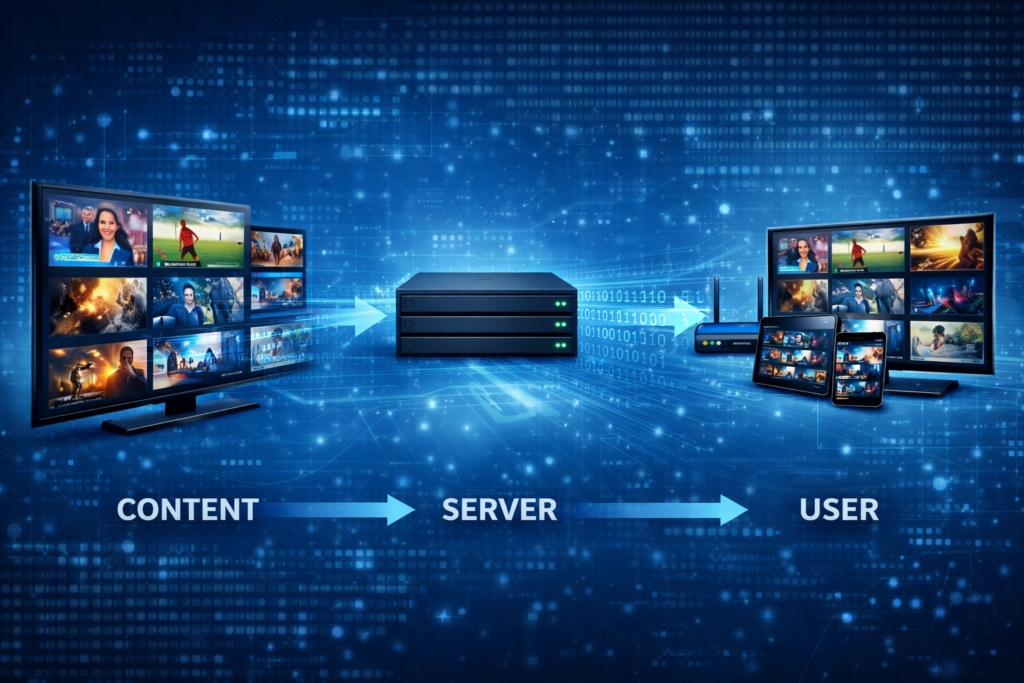
IPTV works by transmitting television content through a managed or unmanaged internet network. Here’s a simplified breakdown of the process:
IPTV services are generally divided into three main types, each offering different ways to consume content.
Live IPTV streams television channels in real time, similar to traditional TV broadcasting. This includes:
Users can watch content as it is being broadcast.
Video on Demand allows users to choose and watch content whenever they want. Examples include:
VOD gives users complete control over what and when they watch.
Time-shifted IPTV allows users to watch previously aired programs. This includes:
It is especially useful for users who miss live broadcasts.
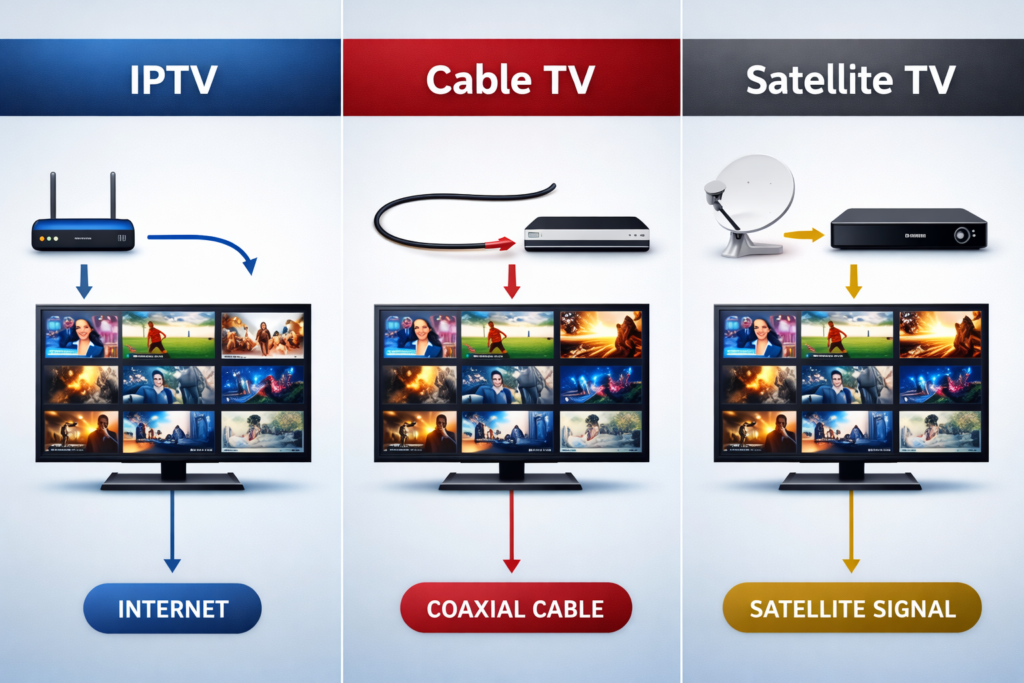
IPTV vs Cable TV :
| Feature | IPTV | Cable TV |
| Delivery | Internet-based | Physical cable |
| Flexibility | High | Limited |
| On-demand content | Yes | Limited |
| Device compatibility | Multiple devices | Mostly TV only |
IPTV vs Satellite TV :
Satellite TV relies on satellite signals and dishes, while IPTV only requires a stable internet connection. IPTV is generally more affordable and offers more interactive features.
IPTV offers many benefits that explain its growing popularity:
Users can watch content anytime and anywhere with an internet connection.
Thousands of channels, movies, and shows from different countries.
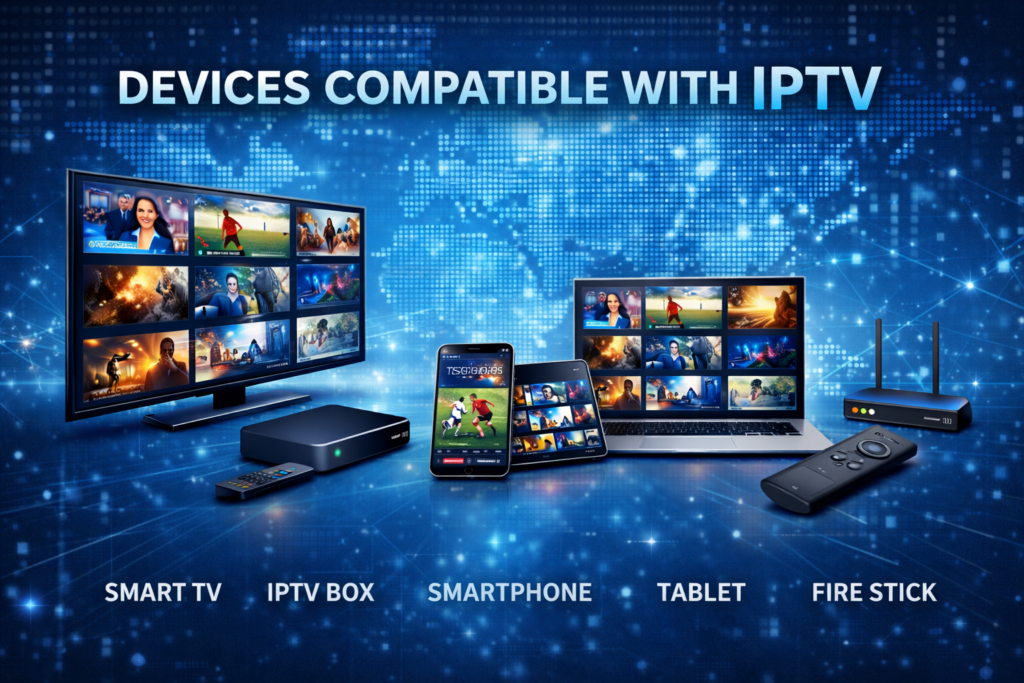
IPTV works on:
Many IPTV services support HD, Full HD, and even 4K streaming.
Features such as pause, rewind, and fast-forward enhance the user experience.
Despite its benefits, IPTV also has some drawbacks:
A slow or unstable internet connection can cause buffering and poor quality.
Not all IPTV services are licensed. Using illegal IPTV services may violate copyright laws.
Untrusted IPTV providers may expose users to malware or data theft.
Some IPTV providers may shut down unexpectedly.
The legality of IPTV depends on the service provider.
Users should always verify the legitimacy of an IPTV service before subscribing.
To use IPTV, you need compatible hardware or software:
Learn more about IPTV apps for smart TVs and how to use them effectively.
IPTV is widely used in:
It allows centralized content management, advertising, and personalized user experiences.
The future of IPTV looks promising due to:
IPTV is expected to continue replacing traditional broadcasting methods.
For many users, yes. IPTV offers more flexibility and content options.
Yes. At least 10 Mbps is recommended for HD streaming.
Yes, IPTV works on smartphones and tablets.
IPTV has transformed the way people consume television content. By delivering TV through the internet, IPTV provides greater flexibility, more content options, and better user control compared to traditional TV services.
However, users must be cautious when choosing IPTV providers to ensure legality, security, and service quality. With proper research and a reliable internet connection, IPTV can be an excellent alternative to cable or satellite television.