
Discover IPTV laws and regulations worldwide. Learn about legal requirements, user responsibilities, penalties, and how to stay compliant.
Introduction
Internet Protocol Television (IPTV) has transformed how people access television content. By delivering live TV channels, movies, and on-demand content over the internet, IPTV offers flexibility and affordability compared to traditional broadcasting systems. However, this convenience comes with complex laws and regulations that many users and providers fail to understand.
While IPTV technology itself is legal, the way it is used and distributed determines its legality. Governments and copyright authorities worldwide are strengthening enforcement against illegal IPTV services, making it essential for users and businesses to understand applicable laws.
This article provides a complete and professional overview of IPTV laws and regulations, covering global legal frameworks, user responsibilities, penalties, and best compliance practices.
1. Understanding IPTV and Its Legal Status
IPTV refers to the delivery of television services using internet protocols rather than cable or satellite signals. IPTV can be categorized into:
- Live IPTV
- Time-shifted IPTV
- Video on Demand (VOD)
Is IPTV Legal?
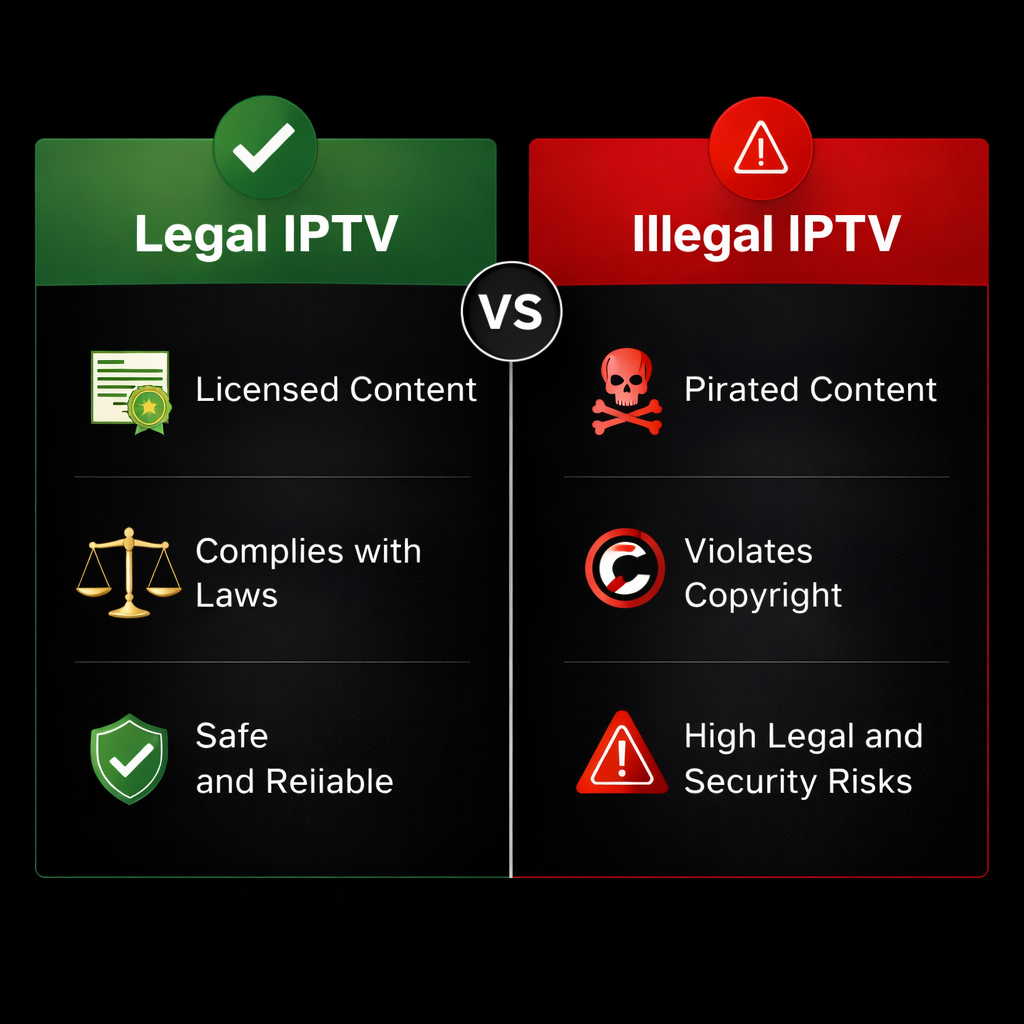
IPTV is legal only when the service provider owns or licenses the content they distribute. Problems arise when IPTV services stream copyrighted content without authorization.
2. The Legal Framework Governing IPTV
IPTV laws are based on several legal principles:
- Copyright law
- Broadcasting regulations
- Telecommunications law
- Consumer protection law
Each country applies these principles differently, but copyright protection remains universal.
3. Copyright Laws and IPTV
3.1 Copyright Ownership
Content such as TV channels, movies, and sports events are protected by copyright. IPTV providers must obtain licenses from content owners before distribution.
3.2 Copyright Infringement in IPTV
Illegal IPTV services violate copyright laws by:
- Streaming premium channels without permission
- Redistributing live sports events
- Offering pirated movies and series
4. IPTV Laws in the United States
In the United States, IPTV is regulated under multiple laws:
- Digital Millennium Copyright Act (DMCA)
- Communications Act
- Federal copyright statutes
Legal Consequences
- Civil lawsuits
- Fines up to $150,000 per infringement
- Criminal penalties for large-scale operations
5. IPTV Regulations in Europe
European Union member states follow harmonized copyright regulations, including:
- EU Copyright Directive
- Audiovisual Media Services Directive (AVMSD)
Enforcement Actions
- Blocking illegal IPTV services
- Heavy fines for users and sellers
- Criminal prosecution for resellers
Countries like the UK, Germany, Italy, and Spain have intensified IPTV enforcement.
6. IPTV Laws in Other Regions
Canada
- Enforced under the Copyright Act
- ISP cooperation with broadcasters
Asia
- Mixed enforcement
- Increasing regulation in Japan, South Korea, and Singapore
Middle East
- Strict media licensing laws
- Service blocking and financial penalties
7. User Responsibilities Under IPTV Laws
IPTV users are not exempt from legal responsibility. Users must ensure that:
- The service is licensed
- The provider is transparent
- Content is legally distributed
Many countries now treat knowing use of illegal IPTV as a violation.
8. Penalties for Violating IPTV Laws
For Users
- Warning notices from ISPs
- Internet service suspension
- Fines
For Providers and Resellers
- Criminal charges
- Asset seizure
- Prison sentences
9. Role of Internet Service Providers (ISPs)
ISPs play a key role in IPTV enforcement by:
- Monitoring traffic patterns
- Sending copyright notices
- Blocking illegal IPTV domains
Some ISPs are legally required to cooperate with authorities.
10. IPTV and Consumer Protection Laws
Legal IPTV providers must comply with:
- Transparent pricing
- Refund policies
- Accurate advertising
Illegal IPTV services often violate consumer protection laws, leaving users with no legal recourse.
11. Business and Commercial IPTV Regulations
Businesses such as hotels, bars, and gyms must follow commercial broadcasting laws.
Violations can result in:
- Business fines
- License suspension
- Lawsuits from broadcasters
12. Enforcement Techniques Used by Authorities
Authorities combat illegal IPTV through:
- Server shutdowns
- Payment processor bans
- App store removals
- International cooperation
Major IPTV networks have been dismantled using coordinated global operations.
13. Common Myths About IPTV Laws
Myth 1: IPTV laws target only sellers
❌ False – users can also be penalized.
Myth 2: Using a VPN makes IPTV legal
❌ False – VPNs do not change copyright laws.
Myth 3: IPTV is a legal gray area
❌ False – laws are clearly defined in most countries.
14. How to Stay Compliant with IPTV Laws
Best Practices
- Choose licensed IPTV providers
- Verify company information
- Avoid “lifetime” or extremely cheap offers
- Read terms and conditions
15. Future of IPTV Regulation
Governments are strengthening IPTV regulation through:
- AI-based piracy detection
- Stronger ISP cooperation
- International copyright treaties
IPTV laws will continue to evolve, making compliance more important than ever.
Conclusion
IPTV laws and regulations exist to protect content creators, broadcasters, and consumers. While IPTV technology itself is legal, unlicensed IPTV services violate copyright and broadcasting laws worldwide.
Users and businesses must understand local IPTV regulations, choose licensed providers, and avoid illegal services to protect themselves from legal penalties, financial losses, and security risks.
Staying informed and compliant is the only safe way to enjoy IPTV content in today’s increasingly regulated digital landscape.


One Response