
Learn about IPTV risks and penalties, including legal fines, security threats, and user consequences. Understand how to avoid illegal IPTV services.
Introduction
Internet Protocol Television (IPTV) has become increasingly popular as an alternative to traditional cable and satellite TV. With access to thousands of channels, movies, and live sports at a low cost, IPTV appears attractive to users worldwide. However, behind this convenience lies a serious set of risks and penalties that many users and providers underestimate.
Illegal or unlicensed IPTV services expose users to legal consequences, financial losses, cybersecurity threats, and privacy violations. Governments, copyright holders, and internet service providers (ISPs) are actively cracking down on IPTV piracy.
This article provides a complete and professional overview of IPTV risks and penalties, explaining legal consequences, financial dangers, and how users can protect themselves.
1. What Is IPTV and Why It Is Risky
IPTV delivers television content over the internet instead of traditional broadcasting systems. While IPTV itself is not illegal, many services operate without proper licenses.
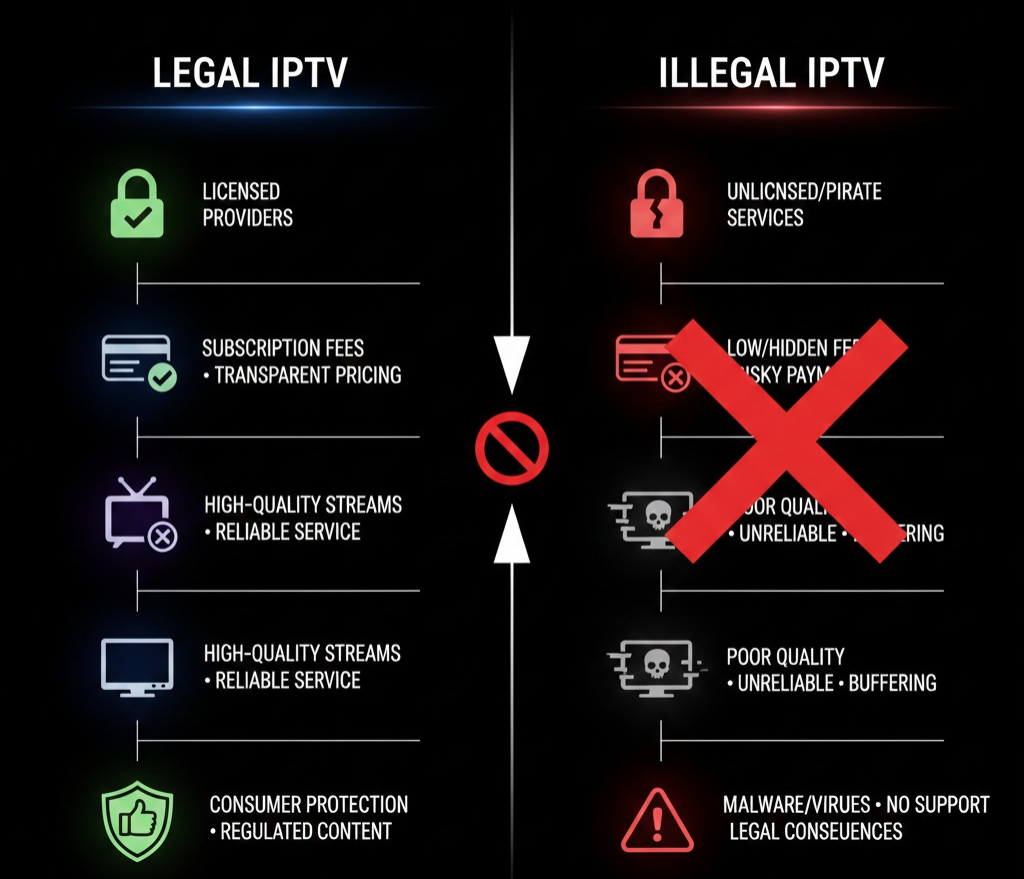
Legal vs Illegal IPTV
- Legal IPTV: Licensed, regulated, and compliant with copyright laws
- Illegal IPTV: Streams copyrighted content without authorization
The biggest risk arises when users subscribe to unlicensed IPTV providers, often unknowingly.
2. Legal Risks of IPTV Usage
2.1 Copyright Infringement
The most serious IPTV risk is copyright infringement. Unauthorized IPTV services distribute copyrighted content such as:
- Live TV channels
- Sports events
- Movies and TV series
Using or distributing such content without permission violates copyright laws in most countries.
2.2 Laws Targeting IPTV Users
Many users believe only IPTV providers are punished, but this is false. In several countries, users can also face penalties, including:
- Warning letters from ISPs
- Internet service suspension
- Civil lawsuits
- Fines
3. IPTV Penalties by Region
3.1 United States
In the U.S., IPTV piracy is prosecuted under:
- Digital Millennium Copyright Act (DMCA)
- Federal copyright laws
Penalties include:
- Fines up to $150,000 per violation
- Criminal charges in severe cases
- ISP cooperation with law enforcement
3.2 Europe
European countries actively fight IPTV piracy.
Common penalties:
- Fines between €1,000 and €25,000
- Account blocking
- Criminal prosecution for resellers
Countries like the UK, Germany, and Italy are especially strict.
3.3 Other Regions
- Canada: ISP warnings, lawsuits
- Asia: Varies by country, increasing enforcement
- Middle East: Heavy fines and service blocking
4. Financial Risks of Illegal IPTV
4.1 Subscription Scams
Many illegal IPTV services:
- Shut down without notice
- Disappear after collecting payments
- Offer no refunds
Users often lose money with no legal protection.
4.2 Hidden Costs
Illegal IPTV apps may include:
- Malware
- Spyware
- Crypto-mining scripts
These can lead to financial theft and increased device costs.

5. Security and Privacy Risks
5.1 Malware and Viruses
Illegal IPTV apps are not regulated and often contain malicious software that can:
- Steal passwords
- Track activity
- Damage devices
5.2 Data Theft
IPTV services may collect:
- Credit card data
- Email addresses
- IP addresses
This data can be sold or leaked on the dark web.
6. Risks for IPTV Resellers and Providers
Operating or reselling illegal IPTV is far more dangerous than using it.
Common penalties include:
- Criminal charges
- Asset seizure
- Heavy fines
- Prison sentences
Several IPTV operators worldwide have received multi-year prison terms.

7. ISP Monitoring and User Tracking
Internet Service Providers actively monitor traffic patterns.
If IPTV piracy is detected, ISPs may:
- Send warning notices
- Throttle internet speed
- Share data with authorities
Using VPNs does not guarantee safety, as payment records and app behavior can still expose users.
8. How Authorities Enforce IPTV Laws
Enforcement Methods
- Server raids
- Payment processor shutdowns
- App store removals
- International cooperation
Major IPTV networks have been dismantled through global operations.
9. How to Avoid IPTV Risks and Penalties
9.1 Choose Legal IPTV Services
Always verify that the IPTV provider:
- Has proper licenses
- Is transparent about ownership
- Offers clear terms of service
9.2 Avoid “Too Good to Be True” Offers
Red flags include:
- Thousands of channels for very low prices
- Lifetime subscriptions
- No company information
9.3 Protect Your Devices
- Use antivirus software
- Avoid unknown apps
- Never share payment info carelessly
10. IPTV Risks for Businesses
Hotels, bars, and cafes using illegal IPTV face:
- Commercial fines
- Business license suspension
- Lawsuits from broadcasters
Commercial use penalties are significantly higher than personal use.

11. Future of IPTV Enforcement
Governments are increasing enforcement through:
- AI-based stream detection
- Stronger ISP collaboration
- International copyright agreements
IPTV piracy will become harder and riskier over time.
12. Common Myths About IPTV
Myth 1: “Only sellers get punished”
❌ False — users can face penalties.
Myth 2: “VPN makes IPTV legal”
❌ False — VPNs do not legalize piracy.
Myth 3: “Free IPTV is safe”
❌ False — free IPTV is often the most dangerous.
13. Case Studies of IPTV Penalties
Case Study 1: Europe
A large IPTV network serving millions was shut down, resulting in:
- €10M+ fines
- Prison sentences for operators
- User account monitoring
Case Study 2: United States
Multiple IPTV sellers received:
- Federal charges
- Asset seizures
- Multi-year sentences
14. Legal IPTV Alternatives
Instead of risky IPTV, consider:
- Licensed IPTV platforms
- Streaming services with legal agreements
- Hybrid cable-IPTV solutions
Legal options may cost more but offer security and peace of mind.
Conclusion
IPTV offers convenience and affordability, but illegal IPTV comes with serious risks and penalties. From legal consequences and financial losses to cybersecurity threats, the dangers are real and increasing.
Users must educate themselves, choose licensed services, and understand local laws. IPTV piracy is no longer a “safe gray area” — it is actively prosecuted worldwide.
To stay informed and protected, always verify legality before subscribing and avoid services that operate without transparency.


2 Responses