
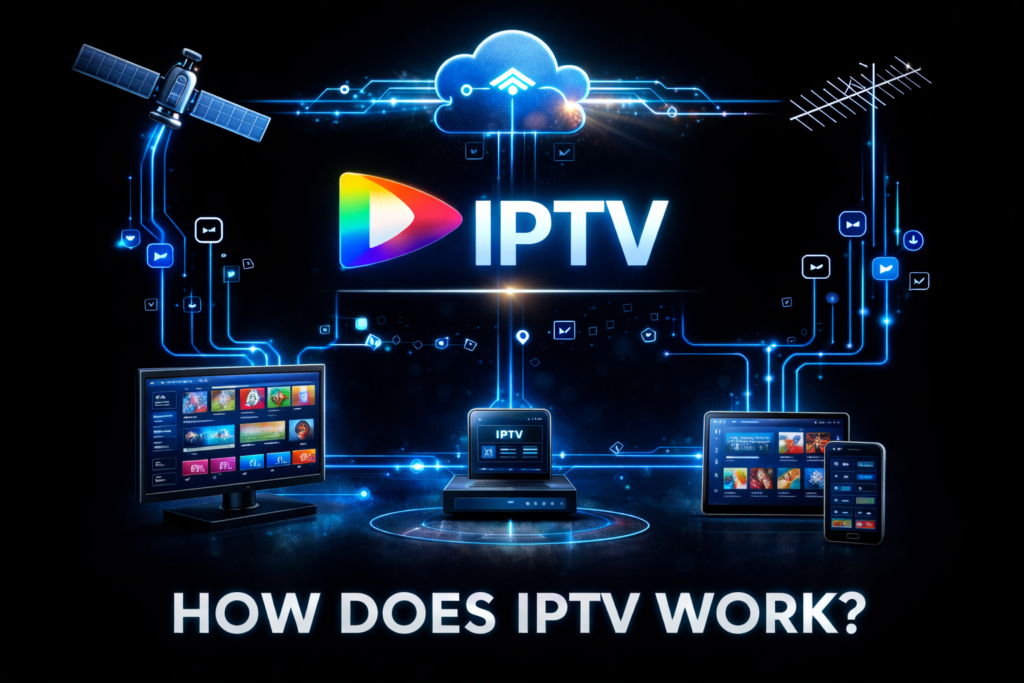
Discover How Does Iptv Work, including streaming technology, types of IPTV, devices, and legal ways to enjoy IPTV safely.
Introduction
Internet Protocol Television (IPTV) has transformed how we watch TV, replacing traditional cable and satellite with internet-based streaming. Many people are curious: how does IPTV work?
In this guide, we break down the technology behind IPTV, explain the different types of services, the devices you need, and how content reaches your screen. This beginner-friendly guide will help you understand IPTV from both a technical and practical perspective.
What Is IPTV?
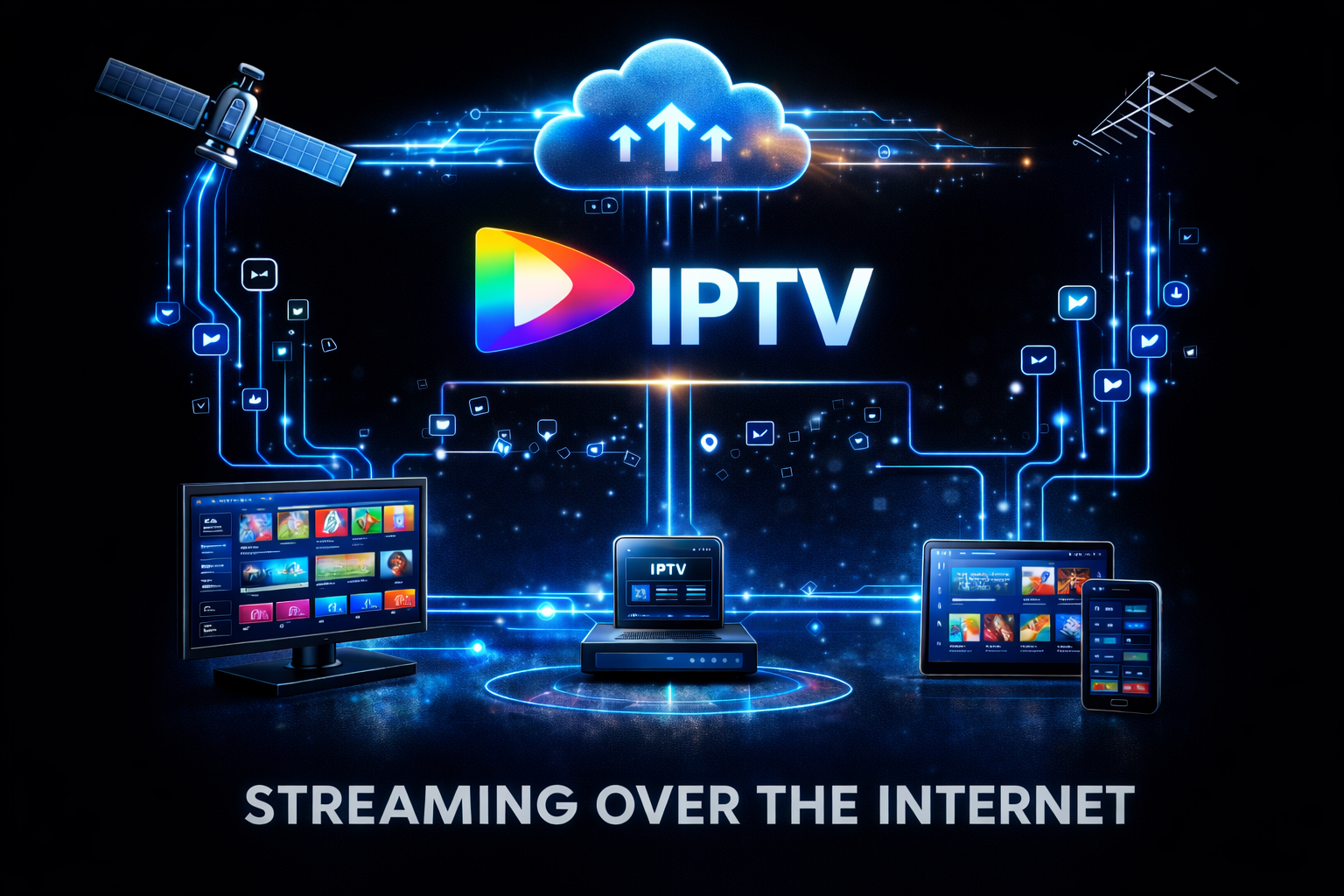
IPTV stands for Internet Protocol Television, a technology that delivers television content through internet connections instead of conventional cable or satellite signals. IPTV converts traditional TV channels into data packets that are transmitted via IP networks.
The Federal Communications Commission (FCC) explains IPTV as a system where television services are delivered using the internet protocol.
How IPTV Differs from Cable or Satellite
- Cable/Satellite TV: Uses dedicated infrastructure and broadcast signals.
- IPTV: Uses internet protocols to stream content on-demand or live.
The flexibility of IPTV allows users to watch content anytime, on various devices, and often at a lower cost than traditional TV packages.
How IPTV Works: The Technology Behind It
IPTV works using a combination of hardware, software, and internet protocols.
Streaming Protocols
IPTV primarily uses the following protocols:
- HTTP Live Streaming (HLS) – Common for video-on-demand and live streams.
- Real-Time Messaging Protocol (RTMP) – Delivers low-latency streaming.
- MPEG Transport Stream (MPEG-TS) – Transmits TV signals efficiently.
Content Delivery
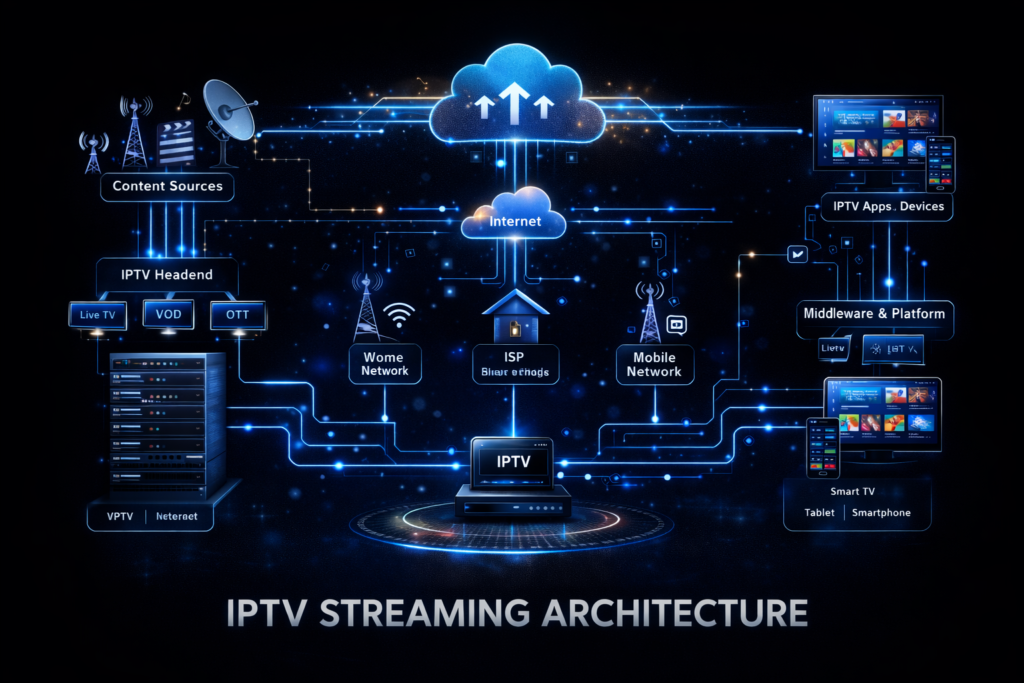
Content is stored on servers owned by IPTV providers or content delivery networks (CDNs). When a user requests a channel or video:
- The request is sent to the server.
- The server breaks the video into small packets.
- These packets are transmitted via the internet.
- The IPTV device reassembles and decodes them to play on your screen.
Types of IPTV Services
There are three main types of IPTV services:
1. Live TV
Streaming television channels in real time, similar to traditional broadcast TV.
2. Video on Demand (VOD)
Access to movies, TV shows, and other pre-recorded content anytime.
3. Time-Shifted TV
Allows users to watch previously aired programs or catch up on shows.
Each service type uses slightly different streaming methods but relies on the same core IPTV technology.
Devices Used for IPTV
You can access IPTV on a variety of devices:
- Smart TVs with IPTV apps
- Set-top boxes like MAG or Android TV boxes
- Computers and laptops using media player software
- Smartphones and tablets via IPTV apps
How to Access IPTV Legally
While IPTV technology is legal, legality depends on whether the service has the proper licenses to stream content.
Legal IPTV Services
- Network-provided apps (HBO Max, CBS, NBC)
- Cable replacement services (YouTube TV, Hulu Live TV)
- Subscription VOD platforms (Netflix, Disney+)
Avoiding Illegal IPTV Services
- Avoid services that offer too many premium channels at very low prices
- Check for transparent company information
- Use official apps from app stores
Frequently Asked Questions (FAQ)
Do I need high-speed internet for IPTV?
Yes, at least 10 Mbps for SD, 20 Mbps for HD, and 50 Mbps for 4K streaming.
Can IPTV work on mobile devices?
Absolutely. Most IPTV services offer apps for Android and iOS.
Is IPTV better than cable?
IPTV can be more flexible and affordable, depending on the service and content.
Conclusion
IPTV works by delivering television content via internet protocols, breaking video into data packets, and streaming it to your device. It offers flexibility, on-demand content, and multiple device support. Choosing legal IPTV services ensures you enjoy content safely, reliably, and without legal risks.


9 Responses